
Border crossings: visas & customs in Costa Rica
Costa Rica has two land borders: one with Nicaragua in the north and one with Panama in the south. For travellers staying in Puerto Viejo, the Panama crossing at Sixaola is the one that matters most, but the same entry rules apply at every official checkpoint. Here is what to expect with visas and customs.
🛃 Entry and the length of stay
Many nationalities are admitted visa-free as tourists, typically for 30 to 90 days at the immigration officer’s discretion; some passports may receive up to 180 days. Rules vary by nationality, so confirm whether your passport needs a visa before travelling. Officers may ask for a valid passport, proof of onward travel and proof of funds. Always leave before your authorised days expire.
🧳 Customs: what you can and cannot bring
If you carry US$10,000 or more in cash (or the equivalent), you must declare it. Firearms, drugs, certain fresh foods and agricultural products, and hazardous items are restricted or prohibited. Bring only what you need and declare what the rules require.
🚌 Crossing by land: Nicaragua and Panama
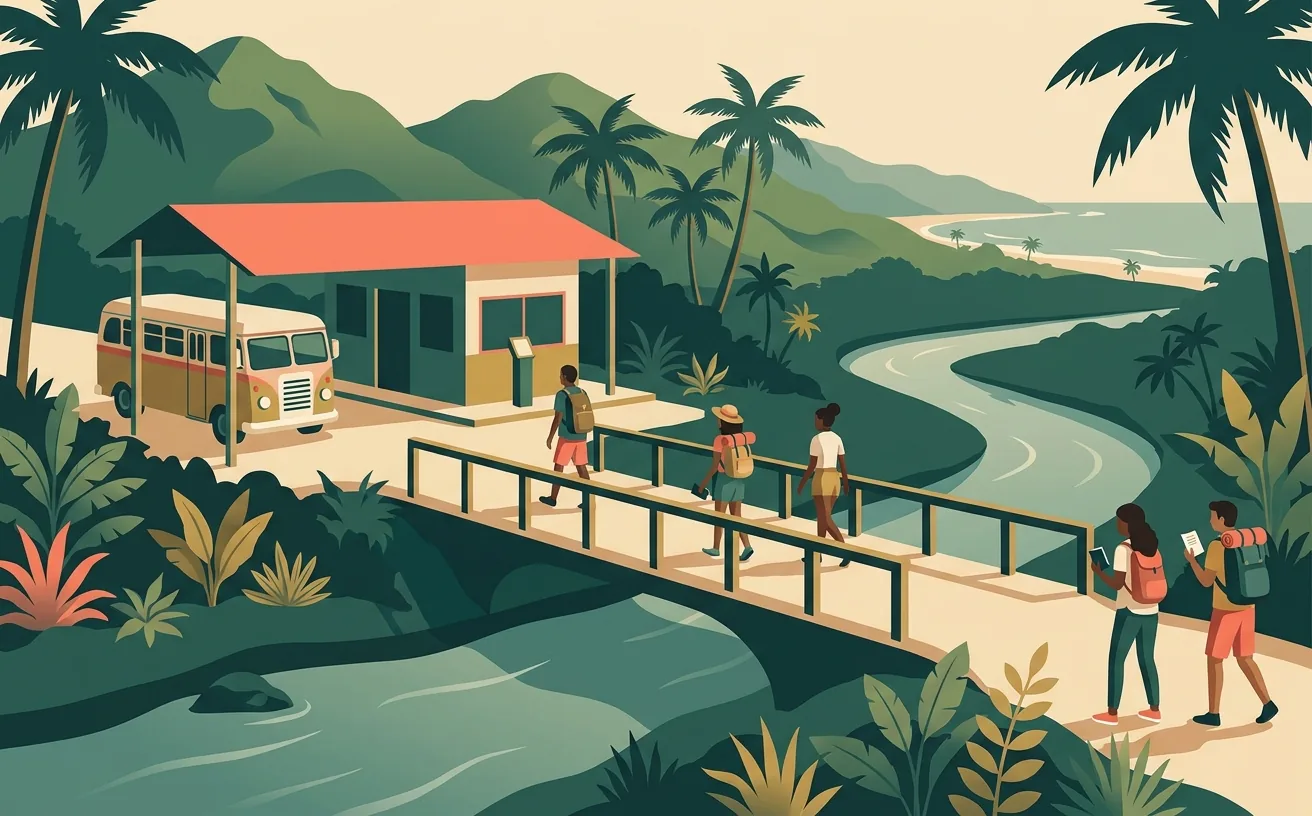
The main northern crossing with Nicaragua is Peñas Blancas, far from the South Caribbean. The main southern crossings with Panama are Paso Canoas on the Pacific side and Sixaola on the Caribbean side. From Puerto Viejo, Sixaola leads to Changuinola and Bocas del Toro in Panama. Use official crossings only, carry your documents and keep the exit stamp you receive when leaving Costa Rica.
Border procedures can change, and a border town is not a place to rely on memory. Check current rules with official sources before you travel and give yourself extra time for queues.
Sources and further information: Visit Costa Rica — Entry requirements · DGME — Dirección General de Migración y Extranjería
Plan your Milongo stay
Explore our apartments in Cocles or contact Lazer to ask about availability and plan your stay.